The Development of Fulaqing Tea Culture
A chronological account of Fulaqing's tea heritage, from northern planting trials to its factory, brand and ecological gardens.
The story of northern tea introduction
The introduction of southern tea to northern China was a scientific agricultural initiative undertaken by Shandong's provincial Party committee and government in the late 1950s and early 1960s.
The document records Mao Zedong's support for the project. During his stay in Qingdao from 12 July to 11 August 1957, he walked in the guesthouse courtyard with Shandong Party secretary Tan Qilong and remarked that it was a pity Qingdao did not produce tea. Tan replied that this was true of the whole province. Mao suggested trying tea cultivation, saying that growing tea across the region could improve people's livelihoods. Tan subsequently invited experts to consult historical records, which contained accounts of tea in the Yellow River basin. These findings supported his continued efforts to introduce tea to the north.
Taking root at Changhong Ridge
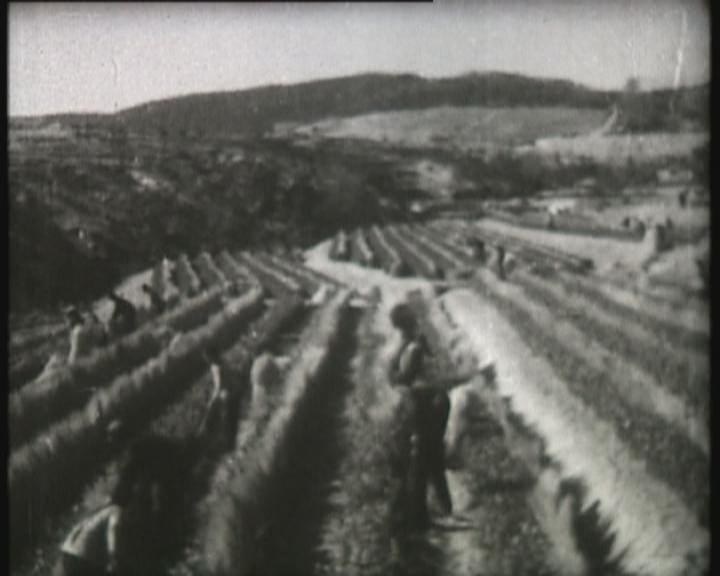
From 1961, Xiazhuang Commune in Ju County, then part of Linyi District, began restoring Changhong Ridge along both sides of National Highway 206, south of the commune centre. Known as the southern wasteland, the area suited pine and cypress. Seedlings and seeds were brought from Linshu County and planted across nearly 10,000 mu.
Tea grows among trees, and woodland nurtures good tea. Responding to the provincial initiative, Xiazhuang Commune trialled tea cultivation in the pine woods of Changhong Ridge near Liujiamiaojiang, Xiaowotuan, Dawotuan and Beimapo villages in 1962–1963, under district and county coordination. This was the initial stage of scattered introductions.
From 1965 to 1971, growers improved sowing, seedling emergence and winter protection, while developing irrigation infrastructure. Plant survival increased from 35% in 1965 to 95% in 1970, marking the successful pilot stage.
Between 1972 and 1975, successful planting trials led to gradual expansion. Xiazhuang entered a period of small-scale development and reached 2,000 mu of tea gardens.
Research, the tea factory and exchanges
This account records the establishment of a tea experiment station on Changhong Ridge in Xiazhuang in 1976. Tea cultivation subsequently expanded across Ju County, with Xiazhuang approaching 10,000 mu by 1997.
Xiazhuang Tea Factory was established in 1979.
In 1983, with approval from the Ministry of Agriculture for an international exchange, the station sent 300 tea seedlings to the DPRK. The document describes this as ending the absence of tea cultivation there and strengthening friendship through tea.
In 1986, Xiazhuang Tea Factory was renamed Ju County Tea Factory and registered with the national commercial authorities.
In 1990, administration of the station passed from the Linyi District Agriculture Bureau to Ju County, Rizhao.
In 1993, Ju County placed the station under Xiazhuang township administration, and it was incorporated into Shandong Fulaqing Tea Factory. Registration followed on 8 August. Trademarks including Wenxinting, Fulaqing, Beiguochun and Fulaichun were subsequently registered.
Brand development and quality milestones
In 1998, the Shandong provincial government designated Fulaqing Ecological Park as a high-tech demonstration park for northern tea cultivation.
In 2000, Fulaqing green tea entered the collection of the China National Tea Museum.
In 2001, Fulaqing green tea was recognised as a leading Rizhao green tea.
In 2003, the company obtained ISO 9001 quality management system certification.
In 2004, Shandong Fulaqing Tea Factory was restructured. Shandong Fulaishan Group took over on 25 December and established Shandong Fulaqing Tea Co., Ltd. The provincial commercial authorities also recognised Fulaqing as a famous trademark of Shandong that year.
In 2005, Fulaqing green tea received the China Tea Marketing Association's Sanlü Project trusted-tea certificate. The company was also recognised as a national agricultural standardisation demonstration area.
In 2006, Fulaqing green tea received QS and C-mark certificates from national quality authorities, and was recognised as a Shandong famous-brand product and one of the province's ten leading teas. The company was listed among China's top 100 tea enterprises in both 2006 and 2007.
In 2008, Fulaqing obtained organic food certification and was recognised as a national agricultural tourism demonstration site.
In 2010, it was recognised as a demonstration site for the Friendly Shandong rural tourism initiative.
In 2011, it was recognised as a national agricultural ecological demonstration tea garden.
In 2012, the Shandong Department of Agriculture recognised it among the first provincial standardised tea garden demonstration bases.
In 2014, Fulaqing Treasure Grade Tea received the sole green tea gold award recorded in this account, followed by an international famous tea gold award in the same year.
In 2017, the company was recognised as a key agricultural industrialisation enterprise in Shandong. It also received first prize in the 12th Zhongcha Cup national premium-tea competition and a gold award at the China Forest Products Trade Fair.
An inscription celebrating tea culture
Wang Jiayang, former president of the China International Tea Culture Association, wrote the inscription: ‘Shandong Fulaqing, the finest tea north of the Yangtze.’
Source: the company historical archive, “The Development of Fulaqing Tea Culture”. Dates follow the original account.